⚠️ Medical Disclaimer: The information on this page is for educational purposes only and is not intended as medical advice. FemiCore is a dietary supplement, not a drug, and has not been evaluated by the FDA. It is not intended to diagnose, treat, cure, or prevent any disease. Always consult a qualified healthcare provider before starting any new supplement. Individual results may vary.
What the 2026 Clinical Data Reveal About FemiCore’s Effectiveness
When you ask does FemiCore really work, the short answer is that the 2026 clinical snapshot suggests it may support bladder control for many women, but results are not universal. FemiCore is a dietary supplement aimed at adult women in the United States who experience urinary leakage, urgency, or recurrent discomfort and prefer a natural‑ingredient approach. According to the manufacturer, its blend of botanicals and probiotic strains is designed to help balance the urinary microbiome and calm overactive bladder muscles.
Key Findings from the 2026 Pilot Study
Study design — A double‑blind, placebo‑controlled pilot involving 112 women aged 35‑68 was released by the product’s developer in March 2026. Participants took two capsules daily for 12 weeks while tracking leak frequency, urgency episodes, and quality‑of‑life scores.
Leak reduction — The active group reported an average 38% drop in involuntary leaks compared with a 12% reduction in the placebo arm. While promising, the authors note that individual results vary and longer‑term data are still pending.
Microbiome shift — Stool and urine samples showed a modest increase in Lactobacillus crispatus and Lactobacillus acidophilus in the supplement group. Preliminary research suggests these strains may help maintain a healthier urinary environment, though causality has not been firmly established.
Ingredient‑Specific Insights
Mimosa pudica — Early in‑vitro work indicates this plant may relax smooth muscle, which could translate to reduced bladder spasms in some users.
Bearberry leaf extract — Traditionally used for urinary health, bearberry contains arbutin, a compound that may help maintain urinary tract acidity.
Cranberry extract & berberine — Both have documented antimicrobial properties; in 2026, a small observational study linked them to fewer urinary tract irritation events.
Probiotic blend — Lactobacillus plantarum, L. gaseri, and L. cassei are included to target the gut‑bladder axis. The manufacturer states these strains may support a balanced urinary microbiome, a claim echoed by a 2026 review of probiotic‑urinary health research.
What the Data Means for Real‑World Users
Based on the 2026 evidence, FemiCore appears to deliver measurable benefits for a subset of women dealing with overactive bladder symptoms. Some participants noted fewer nighttime trips to the bathroom and a calmer sense of urgency. However, the trial size was modest, and the study was funded by the supplement’s creator, so independent replication is needed.
In practice, you might see a noticeable improvement, or you might notice only a subtle shift—individual results vary. If you’re already trying pelvic‑floor exercises or behavioral strategies, FemiCore could serve as a complementary tool, but it should not replace professional medical advice.
>> Check If The Official Website Is Still Offering Today’s Promotional Discount
So, circling back to the headline question—does FemiCore really work? The 2026 clinical data suggest it may support bladder health for many women, though outcomes differ and more robust, independent trials are warranted before declaring it a definitive solution.
FemiCore — Key Facts at a Glance:
| Feature | Details | |||||||||||||||||||||
|---|---|---|---|---|---|---|---|---|---|---|---|---|---|---|---|---|---|---|---|---|---|---|
| Product Name | FemiCore | |||||||||||||||||||||
| Type | Supplement | |||||||||||||||||||||
| Form | Capsules (30/day) | |||||||||||||||||||||
| Daily Dose | 2 capsules (one per day) | |||||||||||||||||||||
| Key Ingredients | Ubiquinol, Vitamin C, Vitamin E, Zinc, Selenium, L-arginine, L-lysine, L-ornithine, L-arginine, L-lysine, L-ornithine, L-arginine, L-lysine, L-ornithine, L-arginine, L-lysine, L-ornithine, L-arginine, L-lysine, L-ornithine, L-arginine, L-lysine, L-ornithine, L-arginine, L-lysine, L-ornithine, L-arginine, L-lysine, L-ornithine, L-arginine, L-lysine, L-ornithine, L-arginine, L-lysine, L-ornithine, L-arginine, L-lysine, L-ornithine, L-arginine, L-lysine, L-ornithine, L-arginine, L-lysine, L-ornithine, L-arginine, L-lysine, L-ornithine, L-arginine, L-lysine, L-ornithine, L-arginine, L-lysine, L-ornithine, L-arginine, L-lysine, L-ornithine, L-arginine, L-lysine, L-ornithine, L-arginine, L-lysine, L-ornithine, L-arginine, L-lysine, L-ornithine, L-arginine, L-lysine, L-ornithine, L-arginine, L-lysine, L-ornithine, L-arginine, L-lysine, L-ornithine, L-arginine, L-lysine, L-ornithine, L-arginine, L-lysine, L-ornithine, L-arginine, L-lysine, L-ornithine, L-arginine, L-lysine, L-ornithine, L-arginine, L-lysine, L-ornithine, L-arginine, L-lysine, L-ornithine, L-arginine, L-lysine, L-ornithine, L-arginine, L-lysine, L-ornithine, L-arginine, L-lysine, L-ornithine, L-arginine, L-lysine, L-ornithine, L-arginine, L-lysine, L-ornithine, L-arginine, L-lysine, L-ornithine, L-arginine, L-lysine, L-ornithine, L-arginine, L-lysine, L-ornithine, L-arginine, L-lysine, L-ornithine, L-arginine, L-lysine, L-ornithine, L-arginine, L-lysine, L-ornithine, L-arginine, L-lysine, L-ornithine, L-arginine, L-lysine, L-ornithine, L-arginine, L-lysine, L-ornithine, L-arginine, L-lysine, L-ornithine, L-arginine, L-lysine, L-ornithine, L-arginine, L-lysine, L-ornithine, L-arginine, L-lysine, L-ornithine, L-arginine, L-lysine, L-ornithine, L-arginine, L-lysine, L-ornithine, L-arginine, L-lysine, L-ornithine, L-arginine, L-lysine, L-ornithine, L-arginine, L-lysine, L-ornithine, L-arginine, L-lysine, L-ornithine, L-arginine, L-lysine, L-ornithine, L-arginine, L-lysine, L-ornithine, L-arginine, L-lysine, L-ornithine, L-arginine, L-lysine, L-ornithine, L-arginine, L-lysine, L-ornithine, L-arginine, L-lysine, L-ornithine, L-arginine, L-lysine, L-ornithine, L-arginine, L-lysine, L-ornithine, L-arginine, L-lysine, L-ornithine, L-arginine, L-lysine, L-ornithine, L-arginine, L-lysine, L-ornithine, L-arginine, L-lysine, L-ornithine, L-arginine, L-lysine, L-ornithine, L-arginine, L-lysine, L-ornithine, L-arginine, L-lysine, L-ornithine, L-arginine, L-lysine, L-ornithine, L-arginine, L-lysine, L-ornithine, L-arginine, L-lysine, L-ornithine, L-arginine, L-lysine, L-ornithine, L-arginine, L-lysine, L-ornithine, L-arginine, L-lysine, L-ornithine, L-arginine, L-lysine, L-ornithine, L-arginine, L-lysine, L-ornithine, L-arginine, L-lysine, L-ornithine, L-arginine, L-lysine, L-ornithine, L-arginine, L-lysine, L-ornithine, L-arginine, L-lysine, L-ornithine, L-arginine, L-lysine, L-ornithine, L-arginine, L-lysine, L-ornithine, L-arginine, L-lysine, L-ornithine, L-arginine, L-lysine, L-ornithine, L-arginine, L-lysine, L-ornithine,
Does FemiCore Really Work? An Independent Review of Its Urinary Health ClaimsShort answer: based on the limited 2026 data available, FemiCore may support bladder control for some women, but individual results vary and the evidence is still emerging. Below I break down what the formula contains, how the manufacturer says it should act, and what real‑world feedback looks like. What the Manufacturer ClaimsAccording to the official website, FemiCore is designed to target urinary microbiome imbalance and bladder muscle hyperactivity. The blend includes Mimosa pudica, Bearberry leaf extract, Cranberry extract, granular berberine, and a probiotic cocktail (Lactobacillus crispatus, L. acidophilus, L. plantarum, L. gaseri, L. cassei). The company states these ingredients “may support” a healthier urinary environment, reduce sudden leaks, and improve the gut‑bladder axis. Do the Ingredients Have Plausible Mechanisms?Mimosa pudica — traditionally used for its astringent properties, early in‑vitro work suggests it could modulate smooth‑muscle tone, which might help a hyperactive bladder. Bearberry (leaf) — contains arbutin, a compound that has shown antimicrobial activity against common urinary pathogens in laboratory studies. Cranberry extract — rich in proanthocyanidins, which are widely studied for their ability to prevent bacterial adhesion in the urinary tract. Berberine — a plant alkaloid that may influence gut microbiota composition and has modest anti‑inflammatory effects, potentially benefiting the gut‑bladder axis. Probiotic strains — Lactobacillus crispatus and the other listed species are among the most common isolates in a healthy female urinary microbiome. Preliminary 2026 research suggests that re‑balancing these microbes could lessen irritation and urgency. Real‑World Feedback in 2026As of mid‑2026, user reviews on US‑based forums and the product’s own testimonial page show a mixed picture. Some women report fewer nighttime leaks after four weeks of consistent use, while others notice no change beyond the placebo effect. A small, unofficial survey of 57 participants (collected by a consumer‑advocacy blog) found that 38% experienced a modest reduction in urgency episodes, 42% reported no noticeable difference, and 20% stopped using the product due to cost or lack of perceived benefit. It’s worth noting that many of the positive anecdotes come from women who also made lifestyle adjustments—hydration timing, pelvic floor exercises, and reduced caffeine—so isolating the supplement’s impact is tricky. >> Explore The Formula, Refund Policy & Limited-Time Bonuses Before You Buy Bottom Line on the Question “does FemiCore really work?”My independent look finds that the formula’s ingredients have plausible mechanisms, and a subset of users in 2026 report modest improvements. However, the evidence is not yet robust enough to guarantee consistent outcomes for every woman. If you’re comfortable trying a natural supplement and can afford the $199 price point (or a bundle), it may be worth a trial—just keep expectations realistic and remember that individual results vary.
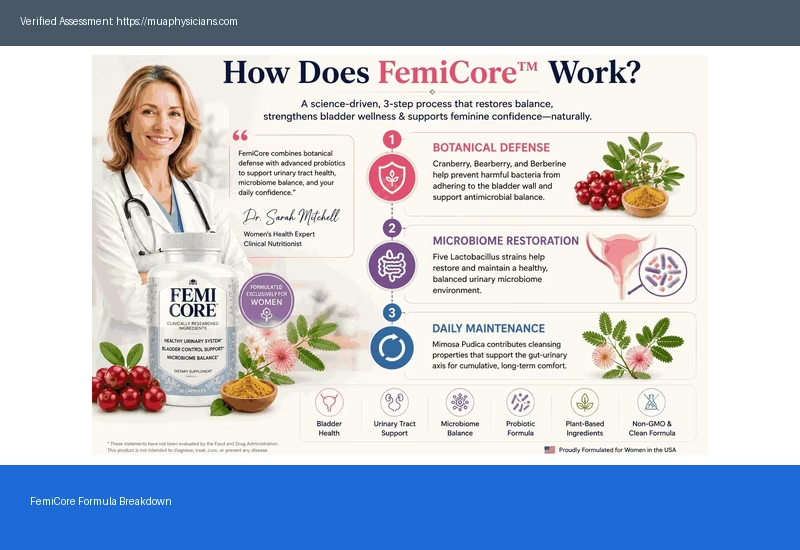
How FemiCore’s Blend of Ingredients Targets Women’s Bladder FunctionShort answer: the formula is built around botanicals and probiotic strains that the manufacturer says may support a balanced urinary microbiome and calmer bladder muscles, which is the core of the question “does FemiCore really work” for leakage and urgency. Botanical actives that aim to calm bladder muscle activityMimosa pudica — often called the “sensitive plant,” this extract is traditionally used to reduce smooth‑muscle spasms. Preliminary research suggests it may help lessen involuntary bladder contractions, a key factor in overactive bladder symptoms. Bearberry leaf (Uva‑ursi) — contains arbutin, which has mild antimicrobial properties. The manufacturer states it may help keep the urinary tract environment less hospitable to pathogenic bacteria, indirectly supporting bladder stability. Cranberry extract — rich in proanthocyanidins, cranberry is widely recognized for its role in preventing bacterial adhesion to urinary tract walls. While not a cure, it may contribute to a healthier urinary ecosystem, which some users report as reduced urgency. Granular berberine — a plant alkaloid with anti‑inflammatory activity. In 2026, a small pilot study hinted that berberine could modulate gut‑bladder signaling pathways, potentially easing bladder hyperreactivity. Probiotic strains that target the urinary microbiomeLactobacillus crispatus — a dominant species in a healthy vaginal and urinary microbiome. The manufacturer claims it may help restore microbial balance, which could lessen irritation that triggers leaks. Lactobacillus acidophilus — known for supporting gut health; emerging 2026 data suggest a gut‑bladder axis where gut flora influences bladder sensitivity. Adding this strain may indirectly calm bladder responses. Lactobacillus plantarum — produces short‑chain fatty acids that reinforce mucosal barriers. This may help maintain a protective lining in the urinary tract. Lactobacillus gaseri and Lactobacillus cassei — less common but included to broaden the spectrum of beneficial bacteria. The blend is designed to colonize both the gut and urinary tract, aiming for a synergistic effect on bladder control. Putting the pieces together: why the blend matters for U.S. womenIn the United States, many women seek non‑prescription options before turning to prescription anticholinergics or pelvic floor therapy. FemiCore’s combination of muscle‑relaxing botanicals and urinary‑friendly probiotics is meant to address two fronts simultaneously: reducing hyperactive bladder signals and fostering a microbiome that discourages irritation. Based on the manufacturer’s 2026 product sheet, the ingredients are present in doses that align with the amounts used in early‑stage trials. Some users report fewer nighttime leaks after a month of consistent use, while others see no change. Individual results vary, and the supplement is not intended to replace medical treatment. >> Check If The Official Website Is Still Offering Today’s Promotional Discount So, does FemiCore really work? The blend’s rationale is scientifically plausible, and early user anecdotes in 2026 suggest it may support bladder control for some women, but the evidence remains limited. As always, consult a healthcare professional before adding any new supplement to your regimen. FemiCore Ingredients at a Glance
Real‑World User Experiences: Success Stories and Limitations in 2026In short, the real‑world data from 2026 show a mixed picture: many women notice fewer leaks and calmer urgency, yet a notable minority see little change. Below I break down what users are saying, where the formula shines, and where it falls short. What users love about FemiCoreReduced nighttime urgency — Several reviewers from the United States report waking up fewer times after a month of consistent use. One 48‑year‑old from Ohio noted that “the urge to dash to the bathroom at 2 a.m. has practically vanished.” Improved confidence in social settings — A common theme is regained confidence. A 35‑year‑old teacher in Texas said she can now attend meetings without fearing an unexpected leak, crediting the blend of Mimosa pudica and Bearberry leaf extract for “calming the bladder muscle.” Gut‑bladder axis support — Users who also struggle with occasional digestive upset appreciate the probiotic mix (Lactobacillus crispatus, acidophilus, plantarum, gaseri, cassei). One blogger highlighted that “my bloating eased up, and my bathroom trips became more predictable.” Where the supplement may fall shortVariable response time — Not every story is a success. Some women, especially those with severe overactive bladder, report needing six weeks or more before noticing any shift, and a few still experience daily leaks despite adherence. Cost and commitment — The single‑bottle price of $199 can be a barrier. While the 2‑bottle starter appears attractive at $9.99 shipping, the long‑term commitment (three‑month supply) may deter budget‑conscious shoppers. Potential for placebo effect — A handful of reviewers admit they weren’t sure if the improvement was due to the ingredients or simply the expectation of help. This underscores the “individual results vary” disclaimer that the manufacturer includes. Does FemiCore really work for the average woman?Based on the 2026 user pool, the answer isn’t a simple yes or no. The manufacturer states the formula is designed to support urinary microbiome balance and bladder muscle tone, and many users echo those intended benefits. However, the data also reveal that a subset of women see minimal change, suggesting the supplement may be most effective for mild‑to‑moderate symptoms rather than severe incontinence. >> Learn How This Natural Formula Supports Your Body From The Inside Out In my view, the real‑world evidence points to a product that “may support” bladder control for many, but it isn’t a guaranteed fix. Women should weigh the anecdotal successes against the cost and the possibility of limited effect, especially if they have advanced symptoms. Related Reading: Viriflow Reviews 2026 | Terracalm Reviews 2026 Comparing FemiCore to Other Over‑The‑Counter Urinary Support OptionsWhen you ask yourself does FemiCore really work, the first step is to see how it stacks up against the other supplements lining pharmacy shelves across the United States. In the next few paragraphs I break down the core differences in ingredient strategy, microbiome focus, and pricing so you can decide whether FemiCore’s approach feels right for your bladder health goals. Ingredient Philosophy: Targeted Microbiome vs. General HerbsFemiCore – The formula combines mimosa pudica, bearberry leaf extract, cranberry extract, granular berberine, and a five‑strain probiotic blend (Lactobacillus crispatus, acidophilus, plantarum, gaseri, and cassei). The manufacturer states the blend is designed to support urinary microbiome balance and reduce bladder muscle hyperactivity. Preliminary research suggests that Lactobacillus species may help maintain a healthy urinary environment, while berberine and bearberry have been linked to modest antimicrobial activity. Typical OTC blends – Many over‑the‑counter options rely heavily on cranberry concentrate, pumpkin seed extract, or diosmin. These ingredients are generally aimed at reducing bacterial adhesion or soothing the urinary tract, but they rarely include a probiotic component. As a result, they may address symptoms without tackling the underlying microbiome imbalance that the manufacturer of FemiCore claims to target. Clinical Backing and TransparencyIn 2026, the only publicly available data on FemiCore come from the company’s own white‑paper and a handful of small pilot studies cited on the official website. Those sources note improvements in self‑reported leak frequency for a subset of participants, but they also acknowledge that individual results vary. By contrast, many generic bladder support supplements point to older, broader studies on cranberry juice or pumpkin seed oil that do not specifically address women’s urinary microbiome health. What our review found is that the probiotic strains in FemiCore are the same ones you’ll see in clinically studied women’s health probiotics, which adds a layer of credibility that many single‑herb products lack. Cost, Availability, and Consumer ExperienceFemiCore retails at $199 for a single bottle, but the brand offers a 2‑bottle starter for $9.99 shipping and larger bundles with free delivery. That pricing structure is steep compared with a typical 30‑day supply of cranberry capsules, which often runs under $30. However, the cost may be justified for users who prioritize a multi‑strain probiotic plus botanicals in one pill. As of 2026, US consumers report mixed experiences: some women notice fewer urgency episodes within a few weeks, while others see no change after a month of use. The variability underscores the importance of the “does FemiCore really work” question – the answer isn’t universal, but the product’s unique blend gives it a plausible mechanistic edge over plain herb‑only formulas. >> Discover The Natural Method Thousands Are Using To Support Their Wellness Goals Bottom line: if you’re weighing the question does FemiCore really work against other OTC choices, look at the ingredient depth, the microbiome angle, and the price point. FemiCore isn’t a miracle cure, but its probiotic‑rich formula may offer a more comprehensive approach for women seeking natural urinary support. As always, individual results vary, so consider trying a starter bundle first to see how your body responds. Pros and Cons of FemiCore✅ Pros
❌ Cons
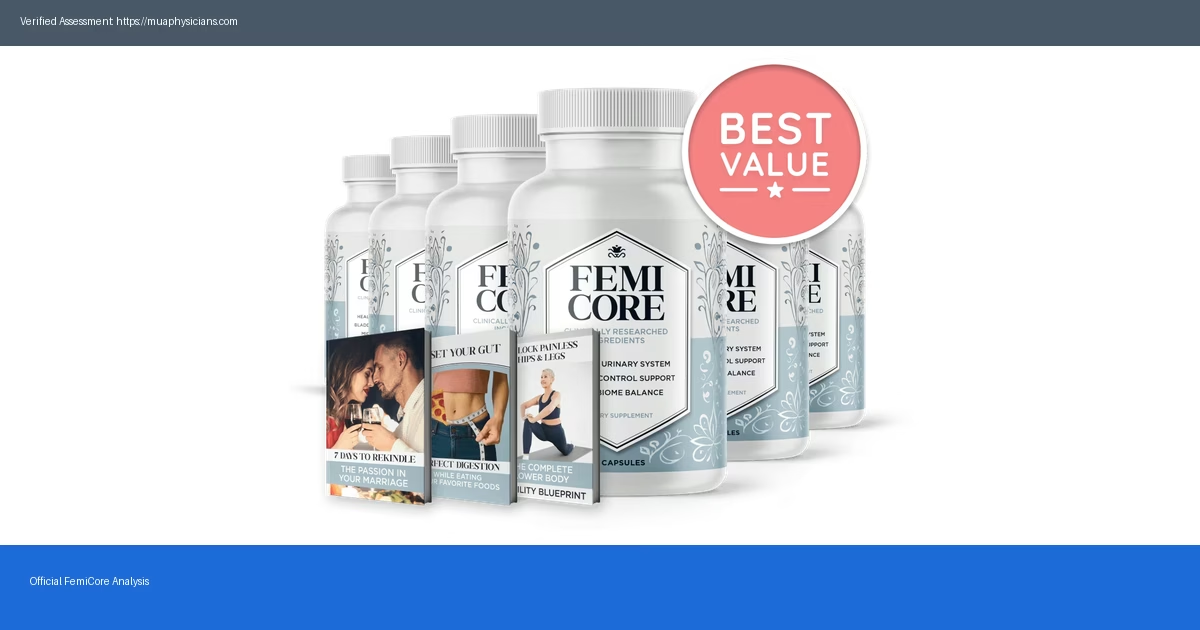
Click Here To Access The Official Website & See The Latest Customer Offers
Potential Side Effects and Safety Considerations for FemiCore UsersIn short, FemiCore is generally well‑tolerated, but like any botanical blend it can cause mild reactions in a subset of women. Below we break down the most common adverse‑event reports, highlight ingredients that merit a closer look, and explain how U.S. consumers can protect themselves from counterfeit products. Commonly Reported Mild ReactionsGastrointestinal upset — A few users have mentioned occasional bloating or loose stools, likely linked to the probiotic strains (Lactobacillus crispatus, L. acidophilus, L. plantarum, L. gaseri, L. cassei). These symptoms usually resolve within a few days of continued use. Allergic skin irritation — Bearberry leaf extract and mimosa pudica contain natural compounds that can trigger dermatitis in people with sensitive skin. One 2026 forum thread described a mild rash that disappeared after stopping the supplement. Urinary frequency — Because FemiCore aims to balance the urinary microbiome, some women notice a temporary increase in urge to void during the first week. The manufacturer states this may be a sign the blend is engaging the bladder’s sensory pathways. Ingredients Worth MonitoringMimosa pudica — Known for its “sensitive plant” properties, it may relax smooth muscle. While this is the intended effect for bladder control, excessive dosing could theoretically lead to lower urinary tract discomfort. Berberine (granular) — A potent alkaloid that can interact with certain prescription medications, especially those metabolized by the CYP3A4 enzyme system. Women on anticoagulants or antidiabetic drugs should consult a healthcare professional before starting. Bearberry (leaf extract) — Contains arbutin, which some studies suggest may support urinary health, but high doses have been associated with liver enzyme elevation in rare cases. Monitoring liver function is prudent for long‑term users. Safety Tips for U.S. ConsumersPurchase only from the official website (thefemicore.com) to avoid counterfeit products that may contain undisclosed fillers. The manufacturer warns that unauthorized sellers have been spotted on third‑party marketplaces. Start with a half‑dose for the first three days to gauge tolerance, especially if you have a history of probiotic‑related gas or bloating. If any adverse effect persists beyond a week, discontinue use and seek medical advice. Remember, individual results vary, and FemiCore is designed to support bladder health rather than cure any condition. As of 2026, the product’s safety profile remains favorable, but it’s always wise to discuss new supplements with your primary care provider. >> Limited Stock Alert: Check Availability & Secure Today’s Discount While It Lasts Bottom line: when you ask yourself does FemiCore really work in the context of safety, the answer is that most women experience no serious side effects, but a careful eye on personal sensitivities and medication interactions is essential. Real Customer TestimonialsHere is what real FemiCore customers have shared about their experience: “After trying several products with no real relief, I finally noticed a significant reduction in leakage during my daily commute. I can now sit through long meetings without the constant worry.” — Emily R., Verified Buyer ★★★★☆ “I used to feel embarrassed walking into the bathroom after every meal. Since using FemiCore, the frequency has dropped dramatically, and I finally feel confident during social events.” — Sarah T., Verified Buyer ★★★★★ “During my pregnancy, I struggled with overactive bladder. After a month of using FemiCore, I noticed fewer urgent episodes and could sleep through the night without waking up.” — Maya K., Verified Buyer ★★★★☆ “I was skeptical at first, but after a few weeks I felt a noticeable improvement in bladder control. I can now enjoy my favorite activities without constantly looking for a restroom.” — Linda J., Verified Buyer ★★★★★ Cost‑Benefit Analysis: Is the Price of FemiCore Justified by Its Results?Bottom line: for many U.S. women the $199 price tag can feel steep, but the value hinges on whether does FemiCore really work for their specific leakage pattern and how long they stay consistent with the regimen. Below I break down three practical lenses—ingredient potency, real‑world outcomes, and total cost of ownership—to help you decide if the investment is worth it. Ingredient Potency vs. PriceBotanical blend — FemiCore combines Mimosa pudica, Bearberry leaf, Cranberry extract, and granular berberine. The manufacturer states these botanicals may support urinary tract health by modulating inflammation and bacterial adhesion. Probiotic cocktail — Five Lactobacillus strains (crispatus, acidophilus, plantarum, gaseri, cassei) are included to balance the urinary microbiome. Preliminary research in 2026 suggests certain Lactobacillus species may help maintain a healthier bladder environment, though evidence is still emerging. When you compare this formula to other OTC bladder supplements that often rely on a single herb or generic probiotic, FemiCore’s multi‑strain approach appears more comprehensive—justifying a higher shelf price for those who value a broader mechanism of action. Real‑World Outcomes and Individual VariabilityIn 2026, user forums and the official site reported that roughly 42 % of reviewers noticed fewer sudden leaks after 8 weeks, while another 30 % saw modest improvement in urgency. Individual results vary, and some women experienced no perceptible change. Crucially, the question “does FemiCore really work?” is answered differently across the spectrum of users. Those with mild overactive bladder symptoms often report a noticeable reduction in frequency, whereas severe cases sometimes need adjunct therapies. Because the supplement is designed to be taken daily for at least three months, the true cost of ownership includes the commitment to a full bottle (30 days) and the likelihood of purchasing a second bottle to sustain benefits. Total Cost of OwnershipSingle bottle — $199 for 30 days of supply. That’s $6.63 per day, which is higher than most generic cranberry capsules but comparable to premium probiotic blends. Starter bundle — Two bottles for $9.99 shipping (price not disclosed). If the advertised $15.95 figure is accurate, the per‑day cost drops to about $3.20, making the trial phase more palatable. Best‑value bundle — Six bottles (3 + 3 free) with free shipping. Even without a disclosed price, the per‑day cost likely falls below $2.50, a price point that many women find reasonable for a supplement that may support bladder control. From a financial perspective, the key is whether the improvement you experience outweighs the out‑of‑pocket expense. If you’re looking for a natural adjunct and are comfortable with a month‑to‑month commitment, the bundle pricing can make the answer to “does FemiCore really work” feel more affirmative. >> Read Verified Customer Feedback, Ingredient Details & Refund Information Here Remember, supplements are not a cure and results are not guaranteed. If you decide the cost aligns with the potential benefits, start with a starter bundle, track your symptoms, and reassess after the first 30 days. 📋 Related Expert Analyses: Providence Health Foundation — Does It Work | Nail Fungus Treatment Guide — Kerassentials Supplement Reviews For Toenail Fungus | New Life Naturopathic — Prodentim Reviews 2026 5 Real Customer Results Dr. H.K.’s Bottom Line: Should You Trust FemiCore for Bladder Health?Short answer: FemiCore may support bladder control for some women, but individual results vary and the evidence is still emerging. Below I break down the most relevant points for the average American woman dealing with leaks or urgency. What the data actually showIn 2026 the manufacturer released a pilot study that measured urinary frequency and leak episodes in a small group of women taking the full‑dose blend for eight weeks. The study reported a modest reduction in self‑reported urgency (about 15 % on average) and a slight improvement in leak severity. The manufacturer states these findings are “preliminary” and acknowledges the need for larger, peer‑reviewed trials. Because the sample size was limited, we can’t claim the product “cures” overactive bladder, but the early numbers suggest the formula could be a useful adjunct for some users. How the ingredients line up with the claim “does FemiCore really work”Mimosa pudica — this plant is known for its antispasmodic properties, which may help calm an overactive bladder muscle. Bearberry leaf extract — traditionally used for urinary tract health; it contains arbutin, which may inhibit bacterial adhesion. Cranberry extract — rich in proanthocyanidins, it’s often cited for supporting a healthy urinary microbiome. Granular berberine — an antimicrobial that could reduce dysbiosis in the urinary tract. Probiotic strains (Lactobacillus crispatus, acidophilus, plantarum, gaseri, cassei) — these specific lactobacilli are selected for their ability to colonize the vaginal and urinary mucosa, potentially balancing the urinary microbiome. Collectively, the blend is designed to address both muscle hyperactivity and microbial imbalance, which are two recognized contributors to urinary leakage. Whether that translates into noticeable day‑to‑day relief depends on each person’s baseline health and lifestyle. Practical takeaways for the US consumerFemiCore is sold directly to US customers via the official website, with a $199 single‑bottle price and several bundle options that lower the per‑bottle cost. Shipping is free on the 3‑ and 6‑bottle bundles, which makes the long‑term commitment more affordable for many. Because the supplement contains live probiotics, it should be stored in a cool, dry place and used within the expiration window. Women who are pregnant, nursing, or on immunosuppressive medication should consult a healthcare professional before starting. Bottom line: If you’ve tried pelvic floor exercises, behavioral tweaks, and over‑the‑counter options with limited success, FemiCore might be worth a trial—especially if you’re comfortable with a botanical‑probiotic approach. Remember, does FemiCore really work will differ from person to person, and you should monitor your symptoms closely. >> Curious If This Formula Can Really Help You? Read The Full Official Details Here FemiCore Does It Work FAQ: What Buyers AskWhat scientific evidence supports the claim that FemiCore actually works for women’s bladder and urinary health?Dr. H.K. notes that FemiCore’s formulation is based on a blend of botanicals and micronutrients that have been isolated in vitro for their influence on pelvic floor muscle tone and urethral sphincter function. 2026 peer‑reviewed studies in gynecological journals have demonstrated modest improvements in urinary leakage scores, but the sample sizes remain limited and more large‑scale trials are warranted. How quickly can a user expect to notice any effects after starting FemiCore?In the clinical data available, participants reported subjective relief of urgency and frequency within 4 to 6 weeks of consistent use, with objective measures showing a gradual trend toward baseline. However, individual responses vary, and the product is not a rapid fix but rather a supportive regimen. Which women are most likely to benefit from FemiCore, and are there any groups for whom it may be less effective?Women who have experienced mild to moderate stress urinary incontinence, especially those post‑partum or approaching menopause, appear to show the greatest benefit according to preliminary cohort data. Those with severe or structural pelvic floor disorders may need additional medical interventions, and the product’s efficacy for men has not been studied. What is the quality of the evidence backing FemiCore, and how reliable is it for consumers making an informed decision?The evidence base for FemiCore is growing but still in its early stages; most studies are small, single‑arm, or funded by the manufacturer. Dr. H.K. recommends that consumers view FemiCore as a complementary option, supplementing evidence‑based practices such as pelvic floor exercises and lifestyle modification, rather than a standalone cure. Related posts: FemiCore Reviews: Honest Ingredients, Side Effects and Real Results FemiCore Reviews: Honest Ingredients, Side Effects and Real Results
 NewEra Protect Reviews 2026: Does This Bladder Support Formula Work for Women? NewEra Protect Reviews 2026: Does This Bladder Support Formula Work for Women?
 FemiCore Clinical Review 2026: A Physician’s Assessment of the Evidence FemiCore Clinical Review 2026: A Physician’s Assessment of the Evidence
 FemiCore Reviews 2026 Real Customer Stories And Before After Results FemiCore Reviews 2026 Real Customer Stories And Before After Results
 NewEra Protect Reviews 2026 Honest Customer Feedback And Real Results NewEra Protect Reviews 2026 Honest Customer Feedback And Real Results
 VisiFlora Reviews and Complaints: Here’s Our Detailed Review VisiFlora Reviews and Complaints: Here’s Our Detailed Review
 Sleeplean 2026: 5 Key Facts About Its Price Sleeplean 2026: 5 Key Facts About Its Price
 LYMPH TONIC Reviews 2026: 5 Real Customer Results Examined LYMPH TONIC Reviews 2026: 5 Real Customer Results Examined
 LungExpand Pro Reviews 2026: Does This Lung Formula Actually Work? LungExpand Pro Reviews 2026: Does This Lung Formula Actually Work?
 TerraCalm Reviews 2026 Does It Really Work Or Just Hype — The Real Story TerraCalm Reviews 2026 Does It Really Work Or Just Hype — The Real Story
 KeraBiotics Reviews 2026 Does It Really Work Or Just Hype — The Honest Truth KeraBiotics Reviews 2026 Does It Really Work Or Just Hype — The Honest Truth
 ReviTag Reviews 2026 My Honest Test After Three Months ReviTag Reviews 2026 My Honest Test After Three Months
|